Primary use case
Findem
External and warm-channel talent intelligence, sourcing, screening, hiring, and executive search
Eightfold
Enterprise-wide hiring, candidate engagement, talent management, internal mobility, and workforce-readiness programs
Intelligent Job Post
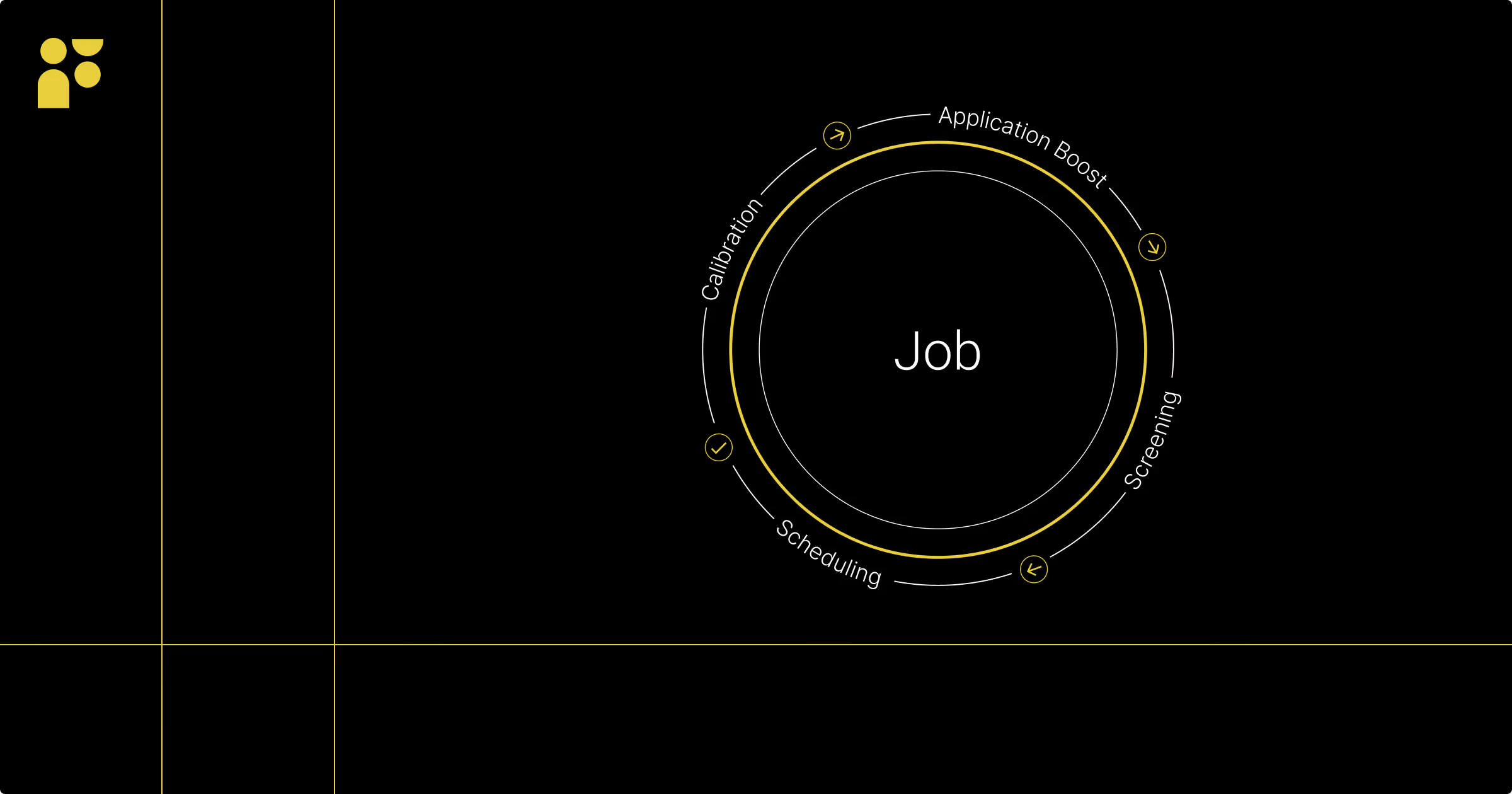
From post-and-pray to progress on autopilot.
Findem Studio
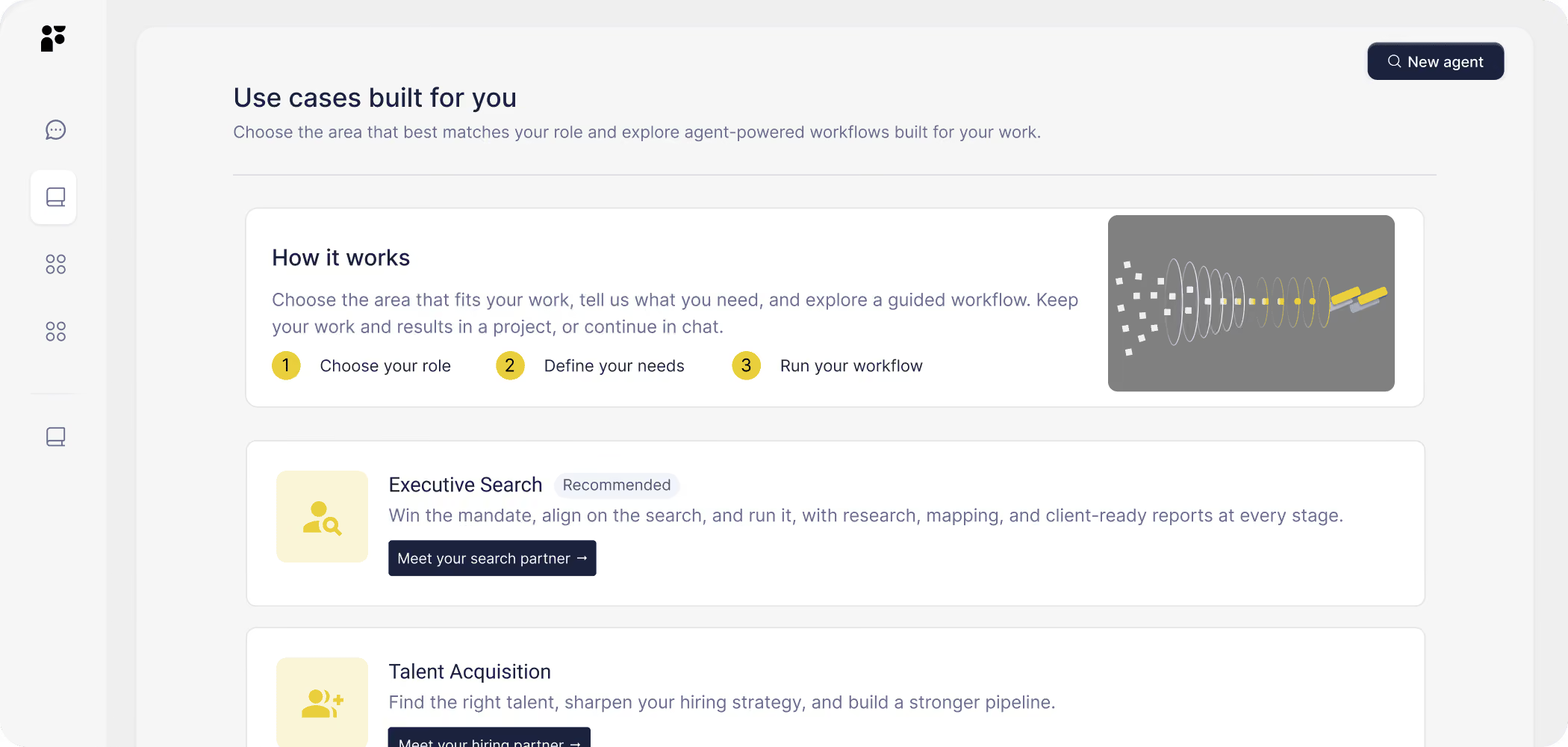
MCPs have become commoditized. Finished work you can trust hasn't.
Solutions
Make hiring your competitive advantage.
Built on relationships, not records.
Multiply your impact with Findem.
Hire smarter from day zero.
Grow portfolio teams with a trusted network.
Your most valuable asset is who you know.
Your community's story starts with opportunity.

Get the sourcing reach, warm intros, and hiring confidence of a company 10x your size.
The DNA of talent made visible.
Activate your networks.
Smart AI starts with smarter data.
Why Findem →
Our commitment to responsible AI.
Built to work with your existing systems.
How our customers make amazing hires.

Protecting data and respecting the right to privacy are central to how we operate.
Resources
Why Findem →
AI and talent terms to know.
Have a question? We're here to help.
Why AI companies are hiring 44% faster than Big Tech.
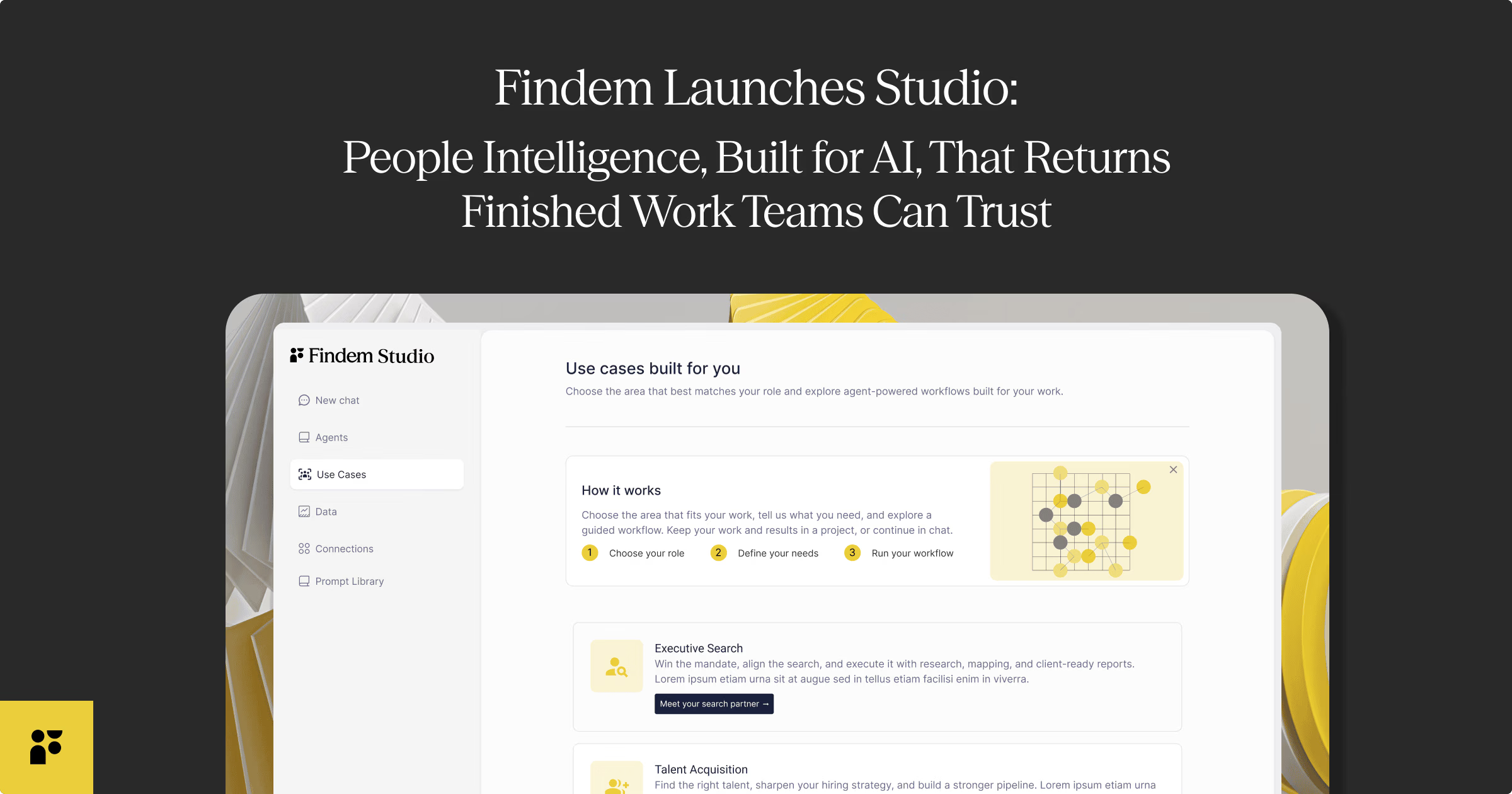
Anyone can try an expert-built agent for free to see how it creates ready-to-use work grounded in transparent evidence and proven methodology.

The People Intelligence Platform
Eightfold connects hiring, candidate engagement, internal mobility, and workforce planning in a broad enterprise platform. Findem is built for talent acquisition teams that need external and warm-channel discovery to carry clear evidence into screening and hiring.











Eightfold connects enterprise talent acquisition with internal mobility and workforce readiness. Candidate Agent adds a continuous candidate-facing journey across SMS, WhatsApp, web, and voice, while AI Interviewer supports structured evaluation and interview handoff.
Findem connects external and warm-channel discovery with screening and hiring on the same 3D contextual foundation. Shared people, company, career, and relationship context helps teams define role criteria, inspect the evidence behind a match, and carry clearer signals into the next decision.
Why teams choose FindemCompare each platform against the sourcing, screening, mobility, and workforce decisions your team owns.
Findem
External and warm-channel talent intelligence, sourcing, screening, hiring, and executive search
Eightfold
Enterprise-wide hiring, candidate engagement, talent management, internal mobility, and workforce-readiness programs
Findem
3D contextual data from 100K+ sources, with 300,000+ searchable attributes across people, companies, careers, and relationships
Eightfold
Enterprise data, market trends, and work signals modeled around skills, capabilities, aspirations, and potential
Findem
Prioritizes passive-candidate discovery and precise attribute-based search across external and warm channels
Eightfold
Supports sourcing, engagement, rediscovery, and selection inside an end-to-end talent-acquisition suite
Findem
Connects skills with career trajectory, company context, patents, relationship signals, and structured screening evidence
Eightfold
Uses skills, capabilities, potential, and fit to calibrate and rank candidates beyond résumé keywords
Findem
Screening Agent, currently offered through a design program, uses approved role criteria to run structured phone screens and return transcripts, summaries, and scores for recruiter review
Eightfold
Candidate Agent supports discovery, questions, application, scheduling, and interview handoff; AI Interviewer provides structured evaluation
Findem
Supports mobility alongside external sourcing on a shared contextual data foundation
Eightfold
Deep suite for career planning, talent marketplace, redeployment, succession, and skills development
Findem
Connects sourcing, market intelligence, mobility, learning, development, and workforce planning
Eightfold
Goes deepest on enterprise workforce readiness, talent development, and internal deployment
Findem
Talent acquisition, sourcing, and executive-search leaders
Eightfold
Enterprise CHRO, talent management, workforce strategy, and HR technology leaders
Findem
Can begin with focused talent-acquisition workflows and expand across the platform
Eightfold
Designed for broad enterprise programs spanning multiple talent and workforce functions
Findem
Assistive, agentic, and build-your-own AI grounded in shared talent context across connected workflows
Eightfold
Candidate Agent, AI Interviewer, and other agents operate across talent acquisition, interviewing, talent management, and workforce workflows
| Findem | Eightfold | |
|---|---|---|
| Primary use case | External and warm-channel talent intelligence, sourcing, screening, hiring, and executive search | Enterprise-wide hiring, candidate engagement, talent management, internal mobility, and workforce-readiness programs |
| Core data model | 3D contextual data from 100K+ sources, with 300,000+ searchable attributes across people, companies, careers, and relationships | Enterprise data, market trends, and work signals modeled around skills, capabilities, aspirations, and potential |
| External sourcing | Prioritizes passive-candidate discovery and precise attribute-based search across external and warm channels | Supports sourcing, engagement, rediscovery, and selection inside an end-to-end talent-acquisition suite |
| Candidate evaluation | Connects skills with career trajectory, company context, patents, relationship signals, and structured screening evidence | Uses skills, capabilities, potential, and fit to calibrate and rank candidates beyond résumé keywords |
| Candidate journey and screening | Screening Agent, currently offered through a design program, uses approved role criteria to run structured phone screens and return transcripts, summaries, and scores for recruiter review | Candidate Agent supports discovery, questions, application, scheduling, and interview handoff; AI Interviewer provides structured evaluation |
| Internal mobility | Supports mobility alongside external sourcing on a shared contextual data foundation | Deep suite for career planning, talent marketplace, redeployment, succession, and skills development |
| Workforce decisions | Connects sourcing, market intelligence, mobility, learning, development, and workforce planning | Goes deepest on enterprise workforce readiness, talent development, and internal deployment |
| Primary buyer | Talent acquisition, sourcing, and executive-search leaders | Enterprise CHRO, talent management, workforce strategy, and HR technology leaders |
| Adoption approach | Can begin with focused talent-acquisition workflows and expand across the platform | Designed for broad enterprise programs spanning multiple talent and workforce functions |
| Agentic AI | Assistive, agentic, and build-your-own AI grounded in shared talent context across connected workflows | Candidate Agent, AI Interviewer, and other agents operate across talent acquisition, interviewing, talent management, and workforce workflows |
Confirmed customer results show how Findem supports sourcing, rediscovery, market expansion, and measurable hiring outcomes.
The practical difference is where each platform starts, what context it carries forward, and how broadly the first rollout needs to reach.
Eightfold combines enterprise data, market trends, and work signals around workforce skills and potential. Findem connects people, company, career, and relationship context across external and warm talent channels, so teams can inspect why someone belongs in the slate.
Eightfold connects hiring with internal development and workforce-readiness programs. Findem turns career trajectory, company context, patents, and relationships into searchable attributes for external discovery, hiring, and executive search.
Eightfold is designed for broad enterprise talent programs spanning multiple HR functions. Findem can start with a defined sourcing or hiring workflow, then reuse the same contextual intelligence as the team's scope expands.
Findem is built for talent acquisition teams that need to find, understand, screen, and hire external talent with more context. Its 3D data and attribute-based search support focused workflows, while structured screening captures role-relevant evidence for recruiter review and downstream hiring decisions.
Explore the Screening AgentEightfold emphasizes enterprise talent acquisition, candidate engagement through Candidate Agent, AI interviewing, career development, internal mobility, and workforce readiness. Findem aligns more directly when the priority is external and warm-channel discovery with shared context that carries into screening and hiring.